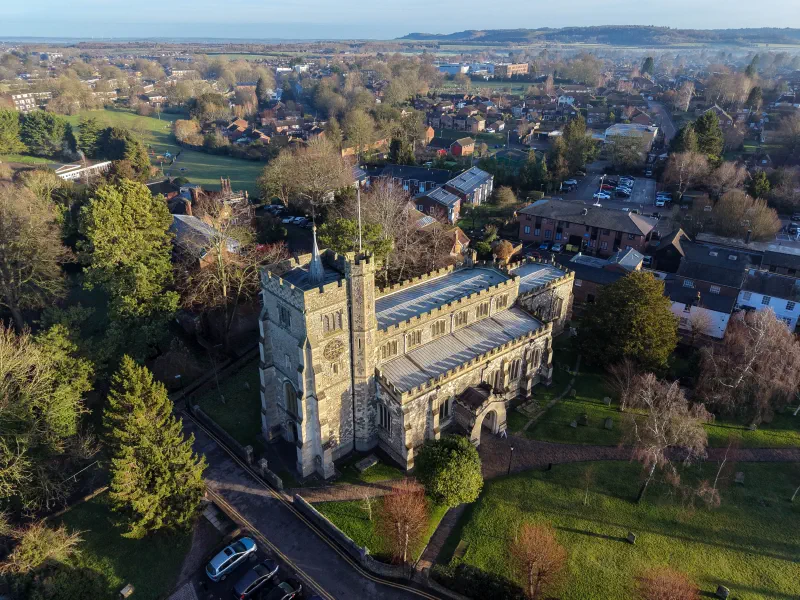
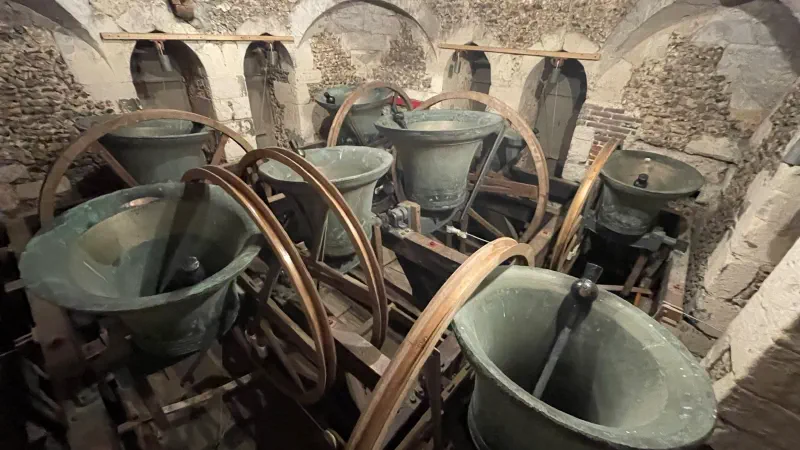
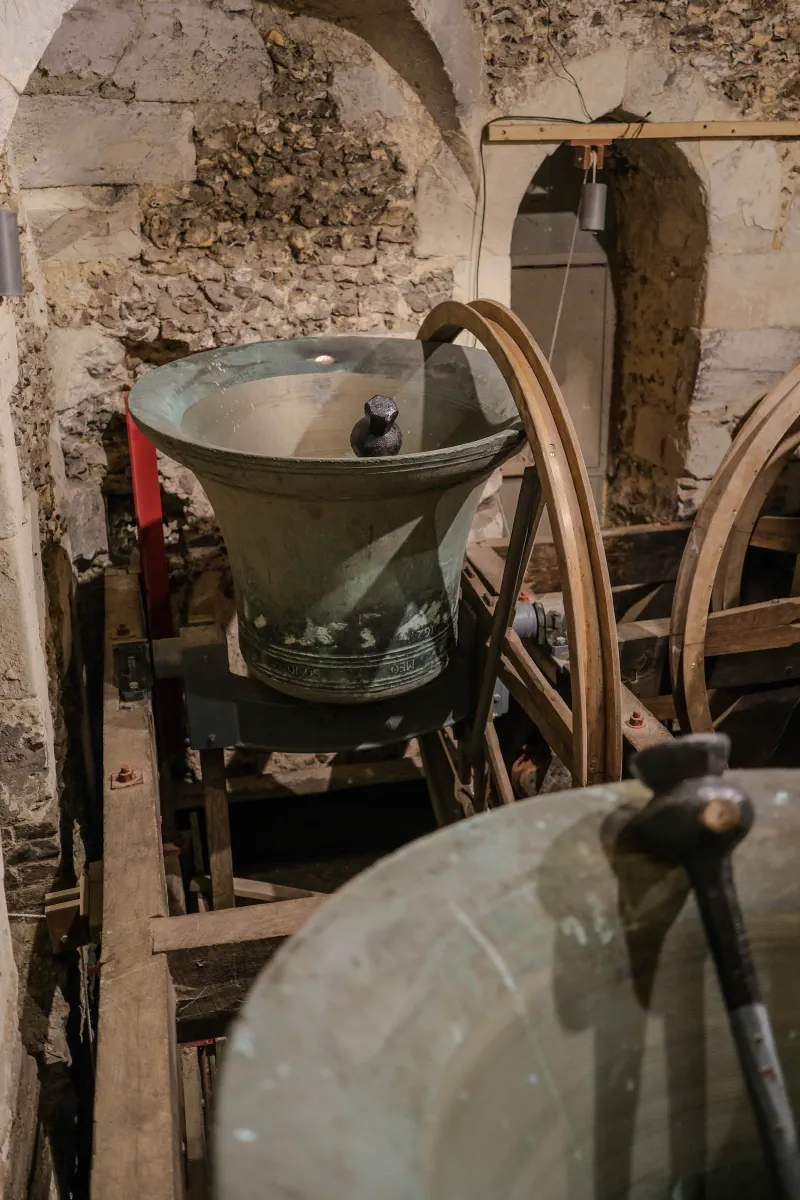
A day at the John Taylor Bell Foundry
A summer outing with the Tring and Berkhamsted bellringers to churches across Leicestershire, culminating in a visit to the historic John Taylor Bell Foundry in Loughborough.
One of the great pleasures of learning to ring has been discovering the wider community of bellringers beyond my own local tower.
In July, members of the Tring and Berkhamsted bands travelled together to Leicestershire for a day of tower ringing, followed by a guided tour of the historic John Taylor Bell Foundry in Loughborough – the last working bell foundry in the United Kingdom. It was a memorable day, combining beautiful churches, fascinating local history and the rare opportunity to ring in the foundry’s own tower.
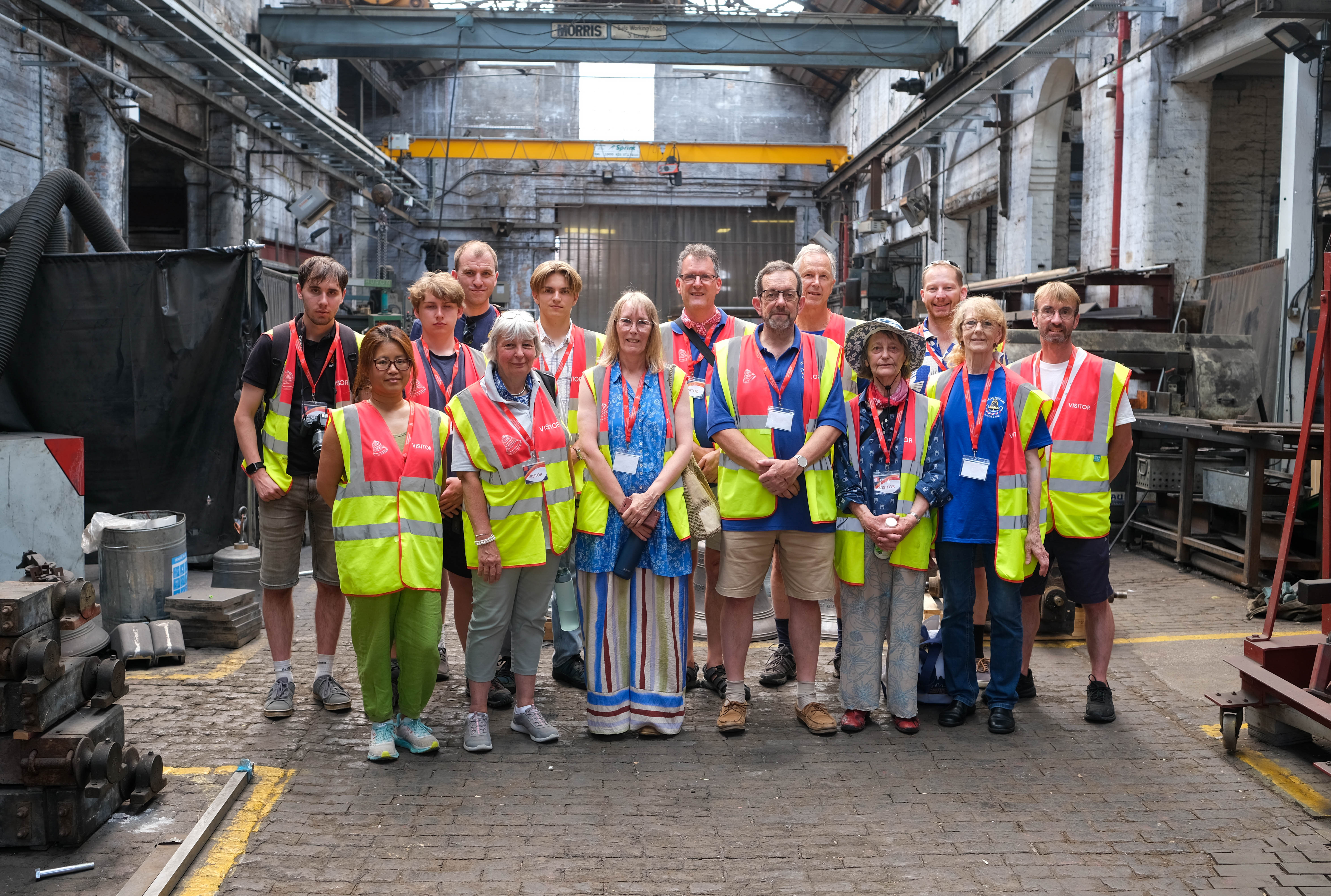
Group photo at the John Taylor Bell Foundry, Loughborough. Photograph: Matt Rabagliati.
The account below was written by Johanna Morgan for the local newsletter.
Early one bright sunny morning in July, the Tring bellringers, together with three ringers from Berkhamsted, divided themselves between three cars and set out for Loughborough.
Our first tower was St Mary the Virgin and St John the Baptist, Rothley, set within a quintessential English village. The church is surrounded by a beautifully kept churchyard and is home to a rare standing cross dating from the mid-ninth century. The compact ringing chamber is reached by climbing thirty-four steps up a dark medieval spiral staircase. One delightful feature was a narrow shelf lined with champagne corks – collected over many years from ringing in the New Year.
The second tower was St Mary-in-the-Elms, Woodhouse, a ring of six bells in the Charnwood area. The church dates principally from the fifteenth century, with later alterations in the seventeenth and nineteenth centuries. Nearby stands Beaumont Hall, which during the Second World War became a secret listening station intercepting enemy communications for Bletchley Park.
Lunch followed at the Three Nuns in Loughborough before the highlight of the afternoon – a guided tour of the John Taylor Bell Foundry.
As the only working bell foundry remaining in the United Kingdom, it was extraordinary to see how bells are made. Huge machinery, blazing furnaces, molten metal, steam, sparks and noise created a dramatic contrast to the peaceful Hertfordshire villages from which we had travelled.
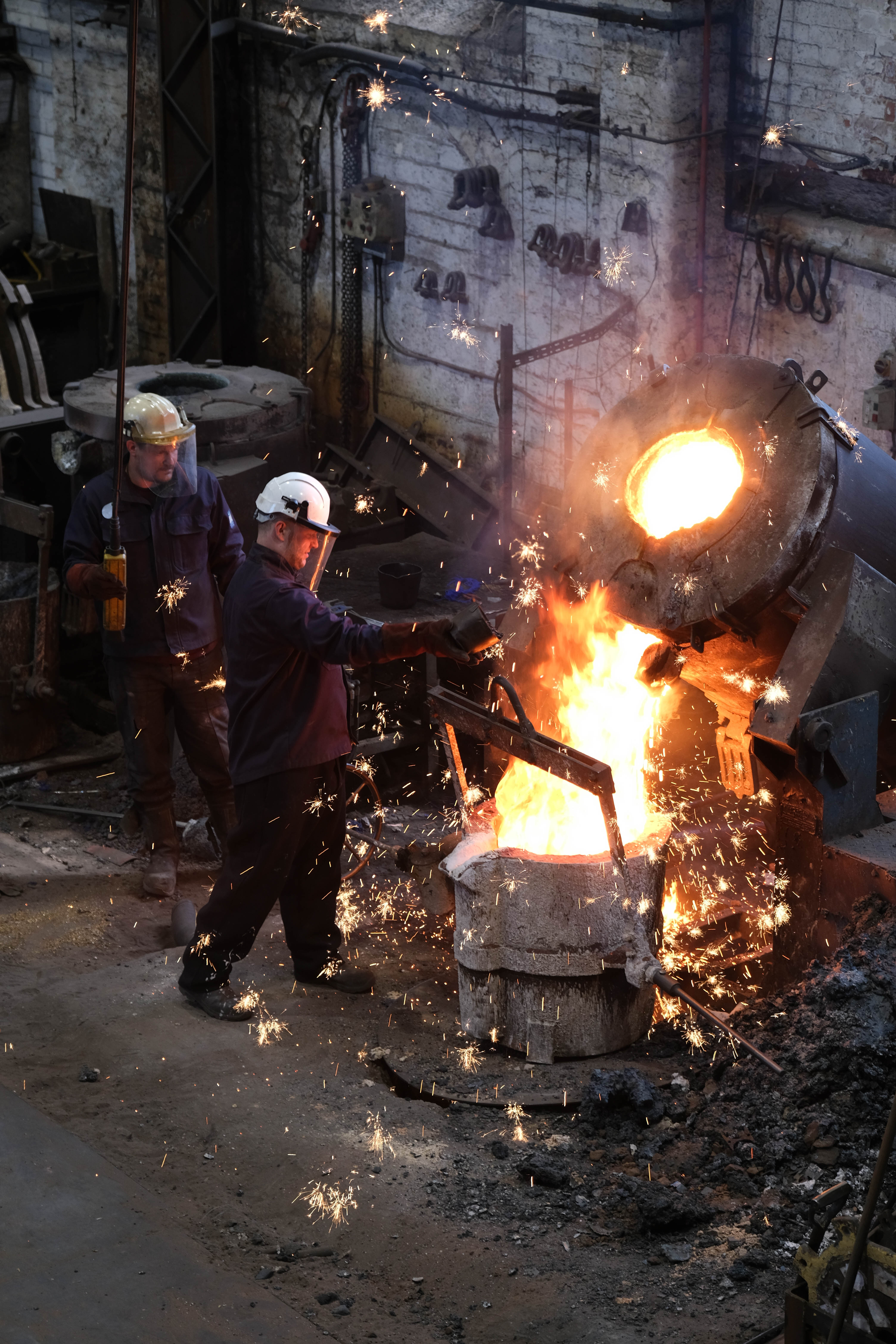
Bell casting at the John Taylor Bell Foundry, Loughborough. Photograph: Matt Rabagliati.
The foundry also has its own ringing tower, housing a lightweight ring of twelve bells. Ringing on twelve bells is considerably quicker than ringing on the eight at Tring and took a little getting used to, but the band soon adapted and thoroughly enjoyed the experience. We wondered how many bellringers have the opportunity to ring in the country’s only working bell foundry.
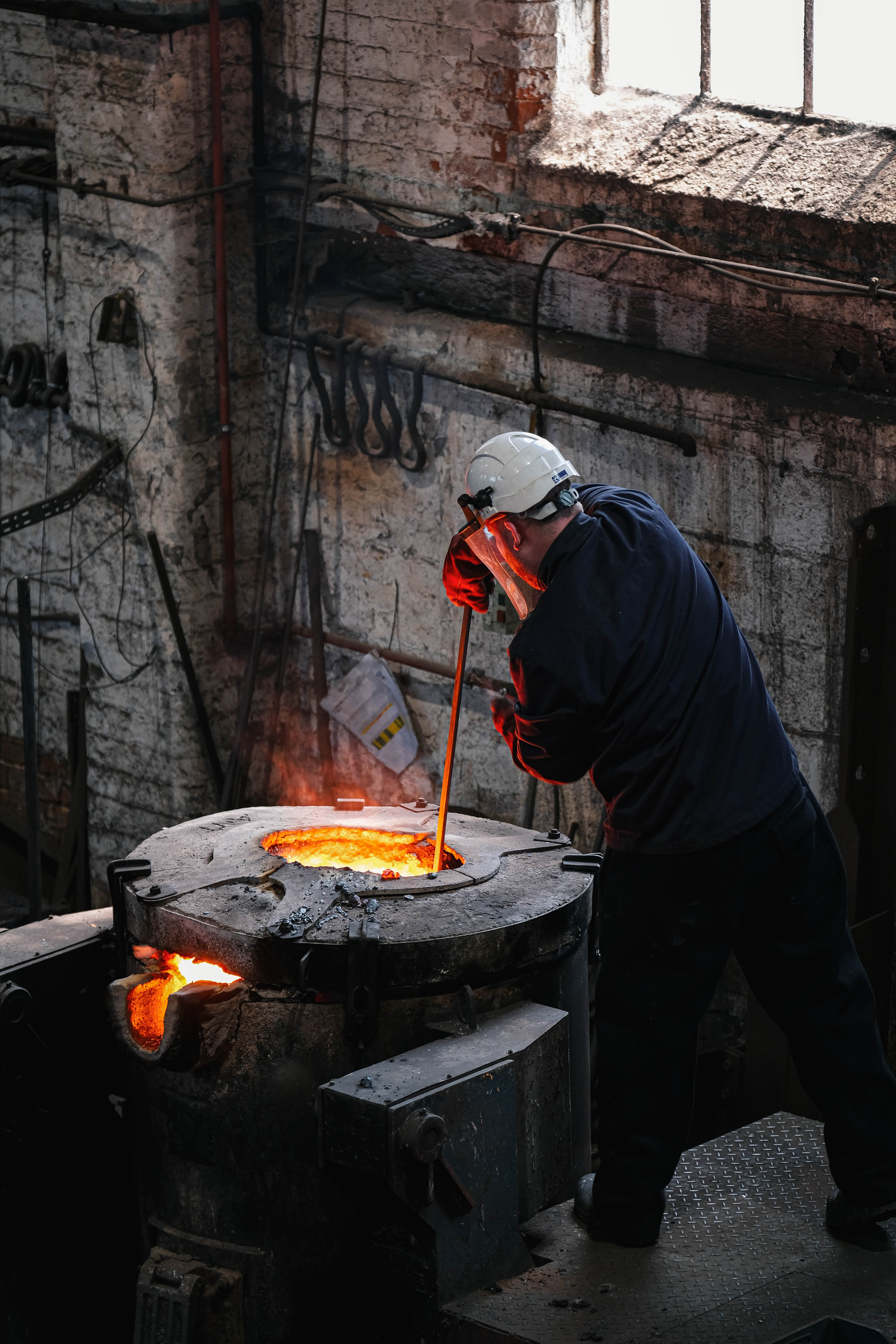
Bell casting at the John Taylor Bell Foundry, Loughborough. Photograph: Matt Rabagliati.
Our penultimate tower was St James the Greater, Oaks in Charnwood. Originally built in 1815 and consecrated on the day of the Battle of Waterloo, the church was rebuilt in local Charnwood stone in 1883. One of its most striking features is a collection of lances mounted on the walls, said to have been recovered from the Waterloo battlefield.
The final stop was St Peter’s, Copt Oak, whose mezzanine ringing chamber creates a light and airy space despite its modest size.
The journey home gave time for reflection on the long and enduring tradition of church bellringing, and the sense of connection it provides with generations past – something for which I am increasingly grateful.
Johanna Morgan, Tring Bell Tower